
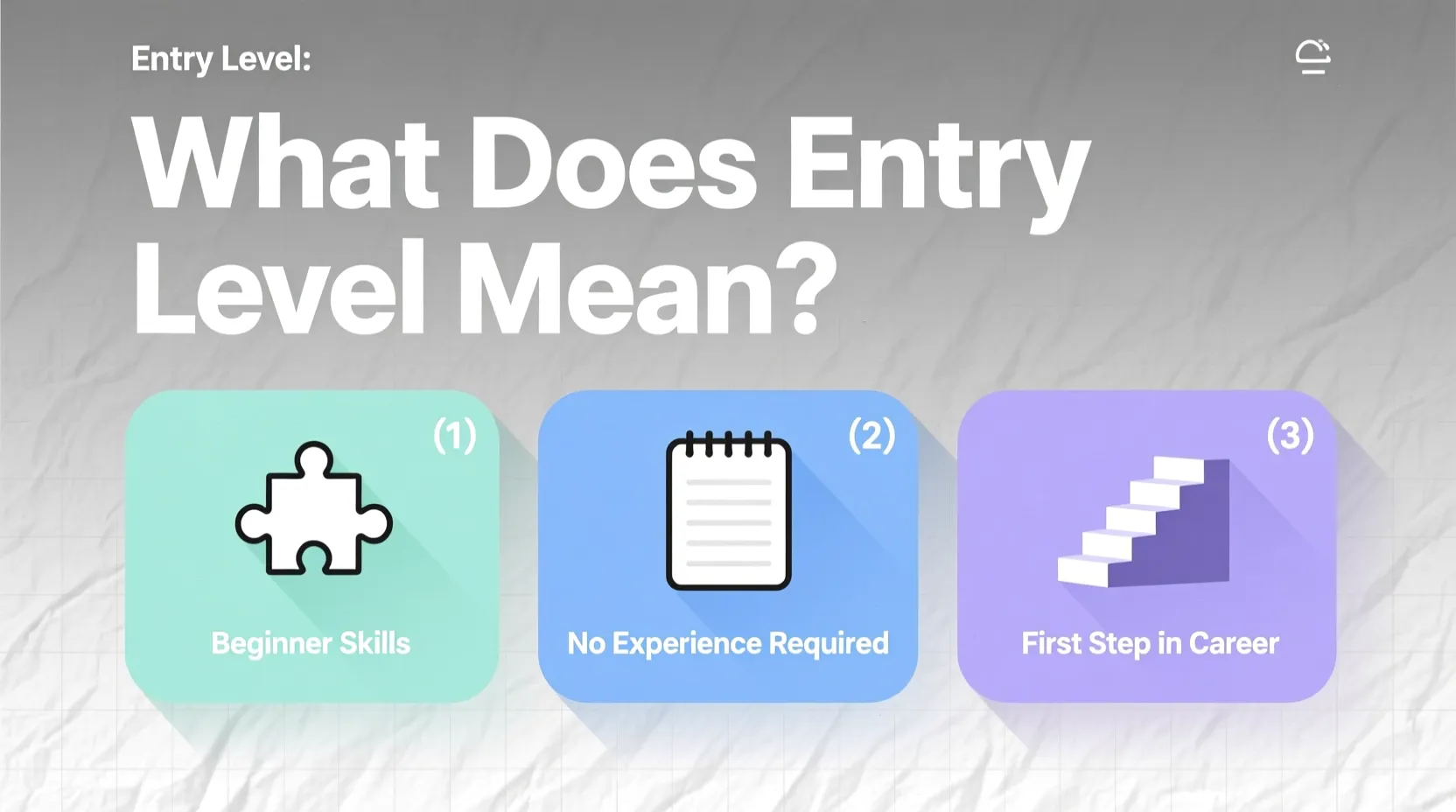

I remember the first time I heard about an “entry-level” job, I was a bit confused. I wondered, does it just mean a beginner job, or is there more to it?
When I started applying, I realized that entry-level actually means you don’t need much professional experience, and it’s a chance to learn on the job.
I focused on my skills and attitude, and gradually I understood that this stage is actually the best time for growth and learning.
It’s where you lay the foundation for your career while gaining valuable experience.
🧠 What Does Entry Level Mean in Text?
“Entry level” is mostly used to describe jobs, tasks, or roles that are ideal for beginners. It can also pop up in casual conversations when someone is referring to starting something new, like a hobby, game, or skill.
Example sentence:
- “I just got an entry-level job at the design firm! 🎉”
In short: Entry Level = Beginner Position = A role or situation suitable for someone new.
📱 Where Is Entry Level Commonly Used?
Entry level is widely recognized in professional, educational, and casual contexts. Here’s where you’ll often see it:
- 💼 Job posts & resumes — Most common usage.
- 📱 Texting friends about work or internships — Casual and social-friendly.
- 🎓 Career advice blogs or LinkedIn posts — Professional and polite.
- 🕹️ Gaming or hobbies — Sometimes used jokingly to describe beginner levels.
Tone: Mostly casual or professional, never flirty. It’s clear and straightforward.
💬 Examples of Entry Level in Conversation
Here are some realistic chat examples:
Example 1
A: “I’m nervous about my first week at work 😬”
B: “Don’t worry, it’s just entry level. Everyone starts somewhere! 💪”
Example 2
A: “Do you have experience in marketing?”
B: “Not really, I’m looking for entry-level roles to get started.”
Example 3
A: “This internship is unpaid, is that normal?”
B: “Yeah, it’s entry level, so most internships start like that.”
Example 4
A: “I want to try coding but I’ve never done it before 😅”
B: “Start with an entry-level course, it’s super beginner-friendly.”
Example 5
A: “Can you recommend a job for someone fresh out of college?”
B: “Entry-level positions are perfect for you! 🎓”
🕓 When to Use and When Not to Use Entry Level
✅ When to Use:
- Talking about a beginner-friendly job or task.
- Offering advice to someone starting out.
- Explaining your own experience level casually.
❌ When Not to Use:
- Formal legal documents or contracts.
- Urgent professional situations where tone must be strictly formal.
- Flirty or romantic conversations.
Comparison Table:
| Context | Example Phrase | Why It Works |
|---|---|---|
| Friend Chat | “Don’t stress, it’s entry level 😄” | Casual & friendly |
| Work Chat | “This is an entry-level assignment” | Clear & professional |
| “Please note, this position is entry-level” | Formal & informative |
🔄 Similar Slang Words or Alternatives
| Slang/Term | Meaning | When to Use |
|---|---|---|
| Beginner | Someone new at a task or skill | Casual chats, friendly advice |
| Junior | Lower-level position in a company | Professional context, resumes |
| Newbie | Completely new to a field | Social media, casual texting |
| Freshman | First-year student or starter | School, college, or newbie topics |
| Trainee | Person learning a specific job | Professional, workplace training |
❓ FAQs
Q1: Is entry level a job or a skill?
A: Entry level usually refers to a job or role suitable for beginners, but it can also describe beginner-level skills or tasks.
Q2: Can someone with experience apply for entry-level positions?
A: Yes! While it’s meant for beginners, anyone can apply, especially if they’re switching careers.
Q3: Is entry level formal language?
A: It’s professional but friendly. Perfect for resumes, job posts, or casual career chats.
Q4: Can entry level be used in texting?
A: Absolutely! Friends often use it to describe starting new hobbies, jobs, or skills.
✅ Conclusion
“Entry level” is one of those terms that might seem confusing at first, but once you understand it, it’s incredibly straightforward.
If you see it in a job posting, a casual text, or a career blog, it always points to something beginner-friendly.
It’s professional, friendly, and easy to use in both casual and formal contexts. Knowing this term can help you confidently talk about jobs, skills, or any new experience without second-guessing yourself.
Next time someone says they’re starting at an entry-level role, you’ll instantly get it — and maybe even give them a supportive thumbs up emoji! 👍


![What Does [sic] Mean](https://punzly.com/wp-content/uploads/2025/12/what-does-sic-mean.webp)