

Have you ever been scrolling through a shipping invoice, email, or online forum and suddenly stumbled across FOB? At first, it might feel like seeing a secret code — I remember thinking, “Is this some shipping slang I missed?” 🤔 Don’t worry, you’re not alone! In the world of commerce and logistics, FOB is everywhere, and understanding it can save you from confusion (and even extra costs).
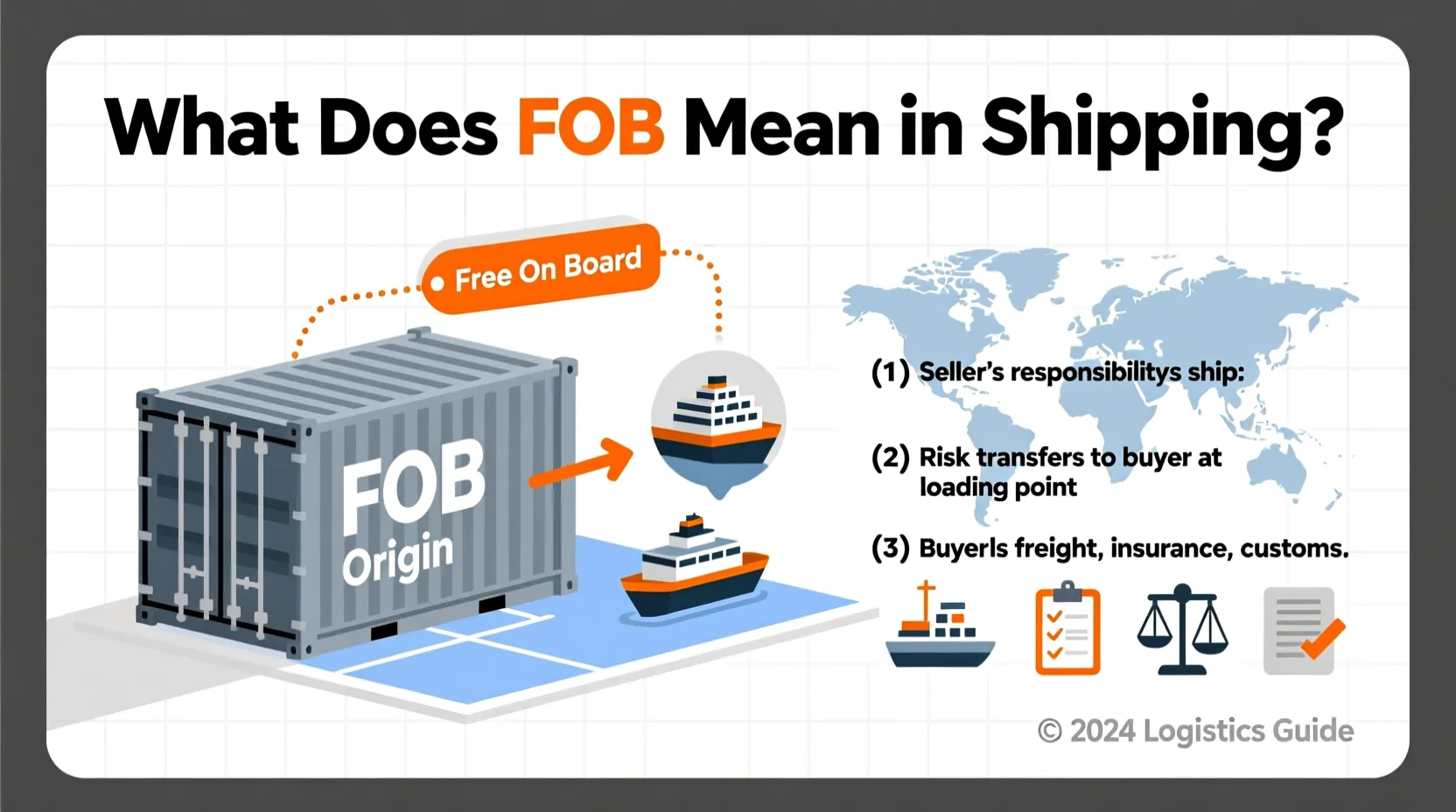
Quick Answer: FOB means “Free On Board”. It’s a formal shipping term used in logistics to indicate who is responsible for goods during transportation and where liability transfers from seller to buyer.
What Does FOB Mean in Text? 🧠
In shipping, FOB stands for “Free On Board”, a term used to define who pays for shipping costs and when ownership of goods transfers. It’s not just text slang—it’s formal, professional terminology in trade.
Example:
- The invoice says: FOB New York. This means the seller covers costs until the goods are loaded onto the ship in New York. After that, the buyer is responsible.
In short: FOB = Free On Board = Indicates seller/buyer responsibilities during shipping.
Where Is FOB Commonly Used? 📱
FOB is primarily used in shipping, logistics, and international trade.
- 🚢 Shipping documents – Bills of lading, invoices, and freight contracts
- 🏭 Business emails – Discussing product delivery terms
- 🌐 E-commerce platforms – For bulk orders or international shipments
- 💼 Formal contracts – Especially between companies importing/exporting goods
Tone: Always formal or professional, not casual or flirty.
Examples of FOB in Conversation 💬
Here are realistic examples of how professionals might use FOB in messages or emails:
- A: Can you confirm the shipment terms?
B: Yes, FOB Los Angeles. You take responsibility once it leaves the dock. - A: Who pays for shipping?
B: It’s FOB Chicago, so the buyer covers the freight. - A: When will we own the goods?
B: As soon as they’re on board the ship—FOB Miami. - A: Can we change shipping responsibility?
B: Only if we agree to update the FOB terms in the contract. - A: Do we need insurance for the shipment?
B: Yes, FOB means risk passes to you once the goods are loaded. - A: Is it included in the price?
B: FOB price includes delivery to the port only.
When to Use and When Not to Use FOB 🕓
✅ When to Use:
- Formal business communications
- Shipping agreements
- Export/import discussions
- Freight and logistics planning
❌ When Not to Use:
- Casual texting with friends
- Social media posts
- Informal chats about general shopping
Comparison Table:
| Context | Example Phrase | Why It Works |
| Friend Chat | “No rush, FOB?” | Too formal for casual convo |
| Work Chat | “Shipment FOB New York.” | Professional & precise |
| “The goods will be shipped FOB Hamburg.” | Formal & clear |
Similar Slang Words or Alternatives 🔄
| Slang | Meaning | When to Use |
| CIF | Cost, Insurance, Freight — seller pays to destination | Professional shipping emails |
| EXW | Ex Works — buyer handles shipping from seller’s location | Logistics planning |
| DDP | Delivered Duty Paid — seller handles everything until delivery | International trade |
| FCA | Free Carrier — seller delivers to carrier, not full port | Export contracts |
FAQs
Q1: Is FOB a slang term?
No, it’s formal shipping jargon, not casual slang.
Q2: Does FOB mean the buyer always pays shipping?
It depends. FOB specifies where ownership transfers; costs after that point are usually the buyer’s responsibility.
Q3: Can FOB terms be negotiated?
Yes, buyers and sellers can agree on different FOB points in a contract.
Q4: Is FOB international or domestic?
Both — it’s widely used in domestic and international shipping.
Conclusion
FOB might seem confusing at first, but once you know it stands for “Free On Board” and understand the responsibilities it defines, reading invoices, contracts, and shipping documents becomes much easier.
Remember, it’s a formal term for logistics, not casual texting slang. Next time you see FOB, you’ll know exactly who’s in charge of the goods and when responsibility transfers — saving both confusion and potential shipping headaches! 🚢✅


![What Does [sic] Mean](https://punzly.com/wp-content/uploads/2025/12/what-does-sic-mean.webp)